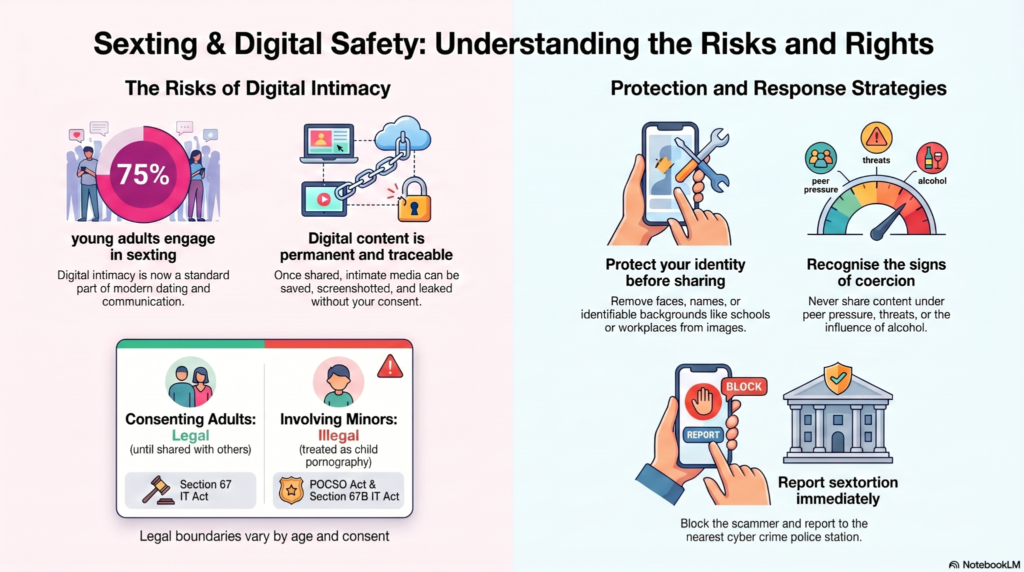
Sex texting or sexting is the sharing of sexually explicit content through the internet or electronic devices such as smart phones. In sexting an online user sends sexual messages, often with nude or seminude photos, and sometimes explicit videos. Sexting can take place through mobile phones, social media platforms, and messaging apps such as Instagram, Tinder, and Snapchat. Anyone can engage in sexting, but it is most common among teenagers and young adults. Studies show that many young adults have shared intimate messages, photos, or videos online.
Is sexting illegal in India?
Sexting itself is not a crime in India or anywhere. It depends on the age of the people involved, type of content and consent.
Sexting Between Consenting Adults
When two consenting adults do private sexting there is nothing illegal. However, if someone saves and shares the content with others, it may fall under Section 67 of the Information Technology (IT) Act. Section 67 prohibits the sharing of publishing or transmitting obscene material in electronic form.
Sexting Involving Minors and Child Protection Laws
A minor does not have agency to provide consent. Thus any sexual image or message involving someone under 18, even if they have provided consent, is illegal. It may fall under section 14 and 15 of POCSO Act, 2012 and section 67B of IT Act. The law treats any sexually explicit content involving a person under 18 as child pornography, even if they share it willingly.
Common Risks of Sexting and Online Safety Challenges
Romantic Relationships and Sexting
Many people use sexting to show affection or stay connected, especially in long-distance relationships, by sending flirty messages or intimate photos.
Peer Pressure and Online Safety Concerns
Teenagers may feel pressured by friends or partners to share intimate content, often due to fear of rejection or a desire to fit in, even if they’re uncomfortable.
Online Dating, Sexting, and Privacy Risks
When two people connect through online platforms like tinder, bumble, instagram, snapchat and start dating. Where conversation can become personal, which can lead to sharing intimate photos or videos from those who have not met in person.
Fake Profiles and Sexting Scams
Scammers often create fake identities to gain trust. Victims, thinking they’re interacting with real people, may share intimate content that can be misused or leaked.
Pressure, Manipulation, and Online Safety Threats
Some may pressure their partners into sending intimate content using promises, threats, or emotional manipulation, making the exchange not truly consensual.
Accidental Sharing and Digital Privacy Risks
Accidental sharing of intimate images or video is a big risk of sexting. Weak account security, stolen devices, or hacking can expose personal photos, videos, or messages to the wrong people or lead to their unauthorized sharing online. Once this content is online, it can spread fast on social media and messaging apps, making it hard to remove entirely.
Impact on victims:
If private chats, photos, or videos are leaked due to accidental sharing, hacking, stolen devices, or unauthorized access, sexting can lead to serious consequences. Some of these consequences are listed below.
- The unauthorized sharing of private content can damage a victim’s reputation and cause anxiety, stress, shame, embarrassment, fear, low self-esteem, and depression.
- Leaked images or videos may result in online bullying, threats, trolling, and humiliation, causing victims to feel unsafe and increase cybercrime.
- Once someone shares intimate content online, others can copy and distribute it, making it difficult for the individual to maintain control over their personal information.
- Offenders may use intimate content to threaten victims for money, and demand for more images, causing emotional and financial harm. Eg- Omegle shutdown.
- When minors are involved, sexting can lead to serious legal issues under child protection and cybercrime laws.
- Victims may suffer lasting emotional effects, including trust issues, social withdrawal, and fear that the content may resurface in the future.
Prevention and safety measures:
- Think carefully before sending any intimate message, photo, or video, as digital content can be copied, saved, or shared without your consent.
- Avoid including your face, name, school, address, workplace, or any other identifying details in photos or videos.
- Turn off your electronic devices and web camera when you are not using them.
- Parents can keep a close eye on how their children are using electronic devices, especially for the younger teens.
- Parents can also discuss the laws and consequences of sexting among teenagers.
- Avoid sexting when you are feeling pressured, upset, emotionally vulnerable, or under the influence of alcohol or drugs.
- Be aware that social media platforms may use facial recognition technology, making it easier to identify people in images.
- Remember that once content is shared online, it may not be possible to completely remove it from the internet.
How to get help against sexting
- Report to your nearest cyber crime police station.
- You can also register your complaint online on cybercrime reporting portal.
- Block the scammer and report their profile on social media platforms.
Conclusion
Sexting has become increasingly common in the digital age, but it carries significant risks to privacy, safety, and emotional well-being. Once intimate content is shared, it can be difficult to control how it is used or who may access it. Promoting digital responsibility, consent, and awareness is essential to creating a safer online environment for everyone.
About the Author
This article is written by Kritika Kumari Saha, a BA LL.B. student at Bennett University, Greater Noida. She is currently interning with Project CyberShield, where she contributes to research and awareness initiatives on cybercrime and digital safety.